
Pet TPLO
Our expert team at Bowling Green Veterinary Surgical Specialty in Bowling Green, KY, offers specialized surgical solutions like Tibial Plateau Leveling Osteotomy (TPLO), including TPLO Cruciate Repair and TPLO & Patella Luxation Repair.
Pet TPLO in Bowling Green, KY
Caring for pets with joint and ligament issues can be challenging, especially when they experience significant pain or discomfort. Our specialized surgeries provide relief from common orthopedic conditions and help restore your pet’s mobility and quality of life.
What Is A TPLO?
The tibial plateau leveling osteotomy (TPLO) is one of the original osteotomies (bone cut) techniques and has been used in practice for over 20 years, with nearly 200 research articles published on the topic. This surgery requires making a semi-circular bone cut at the top of the tibia, which includes the weight-bearing portion of the bone, or the tibial plateau. Following osteotomy, this small section of bone is rotated to allow a reduction of the tibial plateau slope (TPS, an average of approximately 25° in dogs) to approximately 5-7°. The two segments of bone are then stabilized with a plate and screws until the bone heals. In essence, we create a fracture and stabilize the bone in a new position. By rotating the tibial plateau and “leveling” it, the goal is to prevent the femur from sliding down the slope of the tibia and helping to stabilize the knee.
Despite the perceived invasiveness of this procedure, dogs are generally comfortable enough to begin weight bearing on the limb within days of surgery. This rapid return to function/comfort is one of the reasons we prefer the TPLO over the lateral suture technique. A recent study found that even small breed dogs had a more rapid return to weight bearing with a higher level of function with TPLO over a less invasive extracapsular repair technique (lateral imbrication, not a lateral suture).
TPLO Cruciate Repair in Bowling Green, KY
TPLO Cruciate Repair specifically addresses the CCL tear by leveling the tibial plateau, eliminating the abnormal sliding motion in the knee joint. This procedure reduces pain and the likelihood of arthritis, which often develops when a CCL tear is left untreated. At Bowling Green Veterinary Surgical Specialty, we tailor TPLO Cruciate Repair to meet the specific needs of each pet, ensuring a customized approach to healing and recovery.
TPLO & Patella Luxation Repair
In addition to TPLO Cruciate Repair, some pets may suffer from patella luxation, a condition where the kneecap dislocates from its normal position. This can cause intermittent lameness and discomfort. TPLO, combined with Patella Luxation Repair, addresses both the instability caused by a CCL tear and the dislocation of the kneecap, offering a more comprehensive solution for pets experiencing multiple joint issues. The dual procedure improves long-term stability and decreases the risk of further complications in the affected leg.
Learn more about TPLO.
When Should You Consider TPLO or Patella Luxation Repair?
It’s important to seek medical attention if your pet shows signs of limping, difficulty getting up, or reluctance to engage in regular activities like running or climbing stairs. Early diagnosis can prevent the condition from worsening, leading to a better prognosis. If your pet has been diagnosed with a CCL tear or patella luxation, TPLO surgery or TPLO & Patella Luxation Repair might be the best option to restore their comfort and mobility.
Benefits of Pet TPLO Surgery
TPLO surgery offers numerous benefits for pets dealing with knee injuries. By stabilizing the knee joint, the procedure alleviates pain and reduces inflammation, allowing your pet to regain a normal range of motion. Moreover, TPLO surgery has a high success rate, enabling pets to return to their active lifestyles more quickly than with other treatment methods.
For pets undergoing both TPLO and Patella Luxation Repair, the combined surgery enhances stability, which is crucial for long-term mobility. Addressing both issues in a single surgical procedure minimizes recovery time and helps prevent future joint problems.
Post-Surgery Care and Recovery
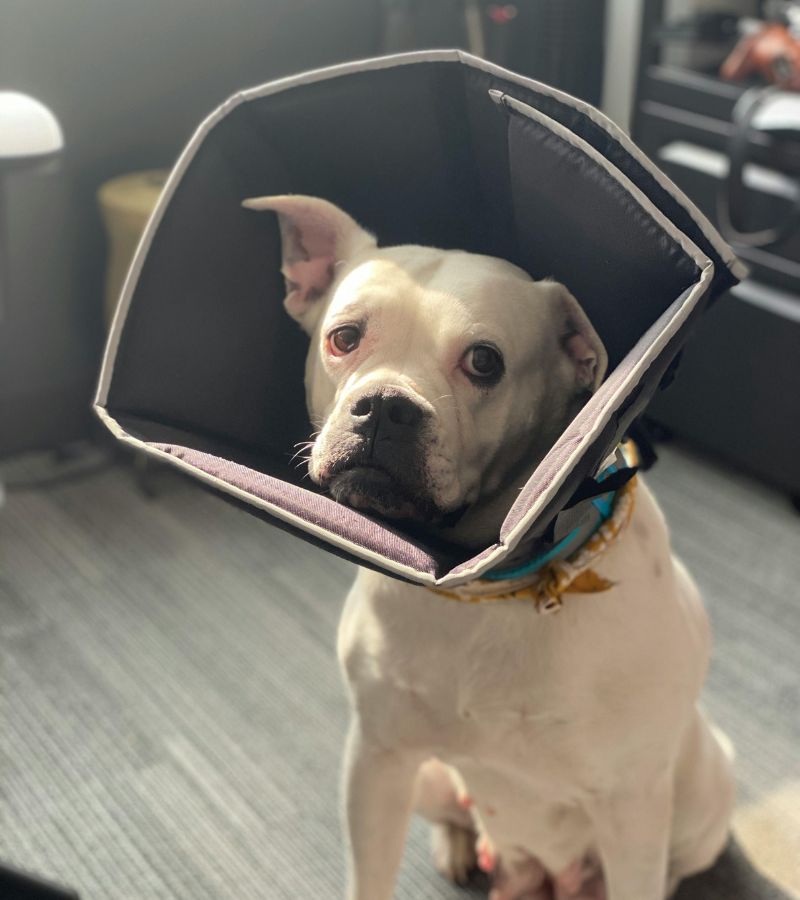
After TPLO or TPLO & Patella Luxation Repair, a structured recovery plan is essential to guide your pet back to health. At Bowling Green Veterinary Surgical Specialty, we provide comprehensive post-operative care, guiding you through the rehabilitation process. Your pet’s recovery will involve physical therapy, pain management, and gradual increases in activity to ensure proper healing. Our veterinary team will monitor your pet’s progress and provide support throughout recovery.
For the first 8 weeks after surgery, we are completely relying on the implants (plate and screws) to stabilize the surgery site. Once the bone has healed, the plate and screws are no longer necessary, though in most cases implants are left in place unless there is a problem such as infection or irritation. Approximately 3% of patients who have a TPLO procedure will need to have the plate removed.
For dogs under 20 pounds, the lateral suture can be a very effective technique for returning your pet to a high level of activity. However, research is also published now supporting the use of TPLO in small breed dogs and some surgeons may prefer this technique over the lateral extracapsular suture, even in this subset of patients. In medium and large breed dogs (>20 pounds), more and more evidence-based literature shows improved outcomes with TPLO over other commonly performed procedures.
With the TPLO procedure, there is a reported 90-95% good to excellent outcome. An excellent outcome is one where your pet can run, jump and play and you will not notice your pet has ever had a problem. With a good outcome, after heavy activity, your pet may have a transient period of being sore and may need a short course of anti-inflammatories. For one reason or another, 5-10% of patients will not return to a level of function that we hope for. It is important to note that even if your pet suffers a complication, such as an infection or a meniscal injury, they can still have a good to an excellent long-term outcome there just may be some hiccups along the way.
Frequently Asked Questions
What does the recovery process look like post-surgery?
During the first eight weeks, we are completely relying on the implants (plate and screws) to stabilize the surgery site. It takes a minimum of eight weeks for bones to heal and good scar tissue to form. This process can take longer in geriatric pets or those with other systemic health conditions.
- Your pet should be confined to a kennel or small room until radiographs show good bone healing.
- Any running (inside or outside), jumping on or off furniture, or playing could lead to severe complications.
Are recheck appointments needed?
- If a bandage or wound dressing was placed, a recheck may need to be scheduled to have this removed
- Your pet should be evaluated 10-14 days post-operatively to evaluate the healing of the incision. if skin sutures were placed, they will need to be removed at this time. Please schedule this appointment with your veterinarian.
- If lameness occurs or your pet fails to improve, X-rays may need to be taken to verify proper implant position and evidence of healing.
- At approximately eight weeks following surgery X-rays will need to be taken by your veterinarian to verify complete bone healing before returning to normal activity. The implants are designed to stay in for life. However, if pain, infection, or irritation occurs we can easily remove these implants.
What if my dog is still limping post-surgery?
There are multiple reasons why a patient may not want to bear weight on a limb following surgery. If your pet is not bearing weight within 2 weeks of surgery or develops an acute onset of lameness any time after surgery, please contact your veterinarian. Below are some of the more common reasons why a pet may limp following surgery.
- “Overdid it”– As with people, it is not uncommon for pets to “overdo it” leading to an acute onset of lameness. Sometimes during the post-operative recovery patients may be more active than is recommended (jump down from a sofa, chase the cat, etc.) or even just take a funny step, leading to a lameness of varying severity. If your pet develops a lameness during the recovery period, please contact your veterinarian so that we can determine if your pet needs to be evaluated to ensure there is not a serious injury.
- Infection– Approximately 5-7% of all patients undergoing a TPLO will develop a surgical site infection. Some infections may clear up after a short course of antibiotics. In approximately 3% of all TPLO cases, an infection may occur associated with the plate and screws. Patients may show signs of lameness or pain, swelling/redness at the surgery site, and discharge. In these cases, patients are placed on antibiotics until the bone is healed (based on x-rays) and the bone plate can be removed.
- Implant-associated pain– Until the bone has healed, we are completely relying on the bone plate to stabilize the surgical site. In situations where a pet is allowed excessive high impact activity, the bone plate or screws can bend or break. Thankfully, this is a very rare complication (<1%). If this occurs, the surgical site may be unstable which in many instances may require further surgery. In other rare instances, patients may simply be uncomfortable with the presence of the plate. In these cases, removal of the plate after the bone has healed will typically resolve the lameness.
- Meniscal tear– Approximately 30-40% of all dogs undergoing surgery for a torn ACL will have a concurrent meniscal injury. In those cases, the torn portion of the meniscus will be removed at the time of surgery. However, approximately 5% of dogs with an intact meniscus at the time of surgery will develop a meniscal tear at some point in the future. When this occurs, patients may become acutely lame. In some cases, these patients may need a second surgery to remove the torn portion of the meniscus.
Veterinary Services in Bowling Green, KY
Pet TPLO
Pet Soft Tissue
Pet Fractures
Pet MPL
Pet Orthopedic
Pet Respiratory Surgeries
Pet Abdominal Surgeries
Pet Urinary Surgeries
Pet Tumor Removal
Pet Amputations
Pet Miscellaneous Surgeries