
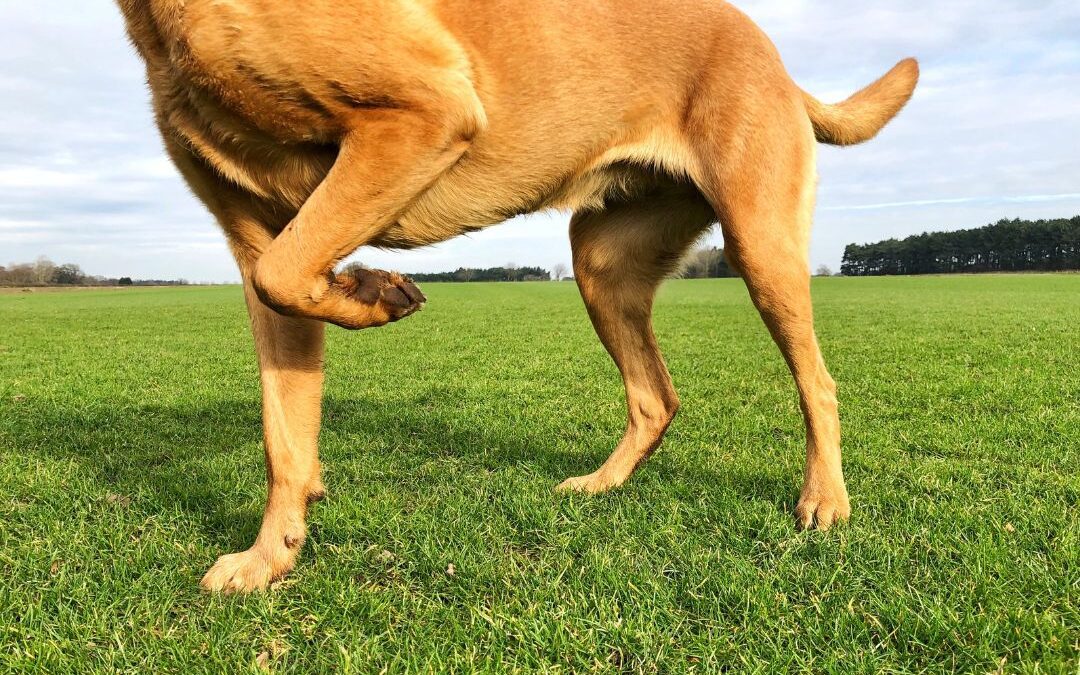
Osteoarthritis (OA) is common in dogs, especially as they age. But when arthritis occurs in a dog’s stifle (knee), it’s usually not a random “wear-and-tear” problem like simple aging alone — there’s typically an underlying structural or surgical disease process that started the joint damage. Understanding why that’s the case helps owners spot trouble early and get the right care.
Why stifle (knee) arthritis usually has an underlying cause
- Stifle anatomy and mechanics: The stifle is a complex joint (femur, tibia, patella, cruciate ligaments, menisci). Normal function depends on intact ligaments and properly tracking patella. Small changes produce large abnormal forces and cartilage wear.
- Injuries and instability drive arthritis: In dogs, most stifle OA begins when something destabilizes the joint — for example:
- Cranial cruciate ligament (CCL, often called ACL in humans) rupture or partial tear — the most common cause of stifle OA.
- Meniscal tears — often occur secondary to CCL injury and accelerate cartilage damage.
- Patellar luxation (kneecap dislocation) — chronic maltracking leads to abnormal wear and joint remodeling.
- Conformation or developmental disorders — severe hip or limb deformities change joint loading and predispose to early OA.
- Trauma or intra-articular fractures — these directly damage cartilage and joint surfaces.
- Inflammatory or infectious causes are less common but possible — septic arthritis or immune-mediated disease can damage joint surfaces, but these are usually acute and identifiable. Because these mechanical or structural problems change joint forces or expose cartilage to abnormal stress, they initiate the cycle of cartilage breakdown, inflammation, and progressive osteoarthritis. In practice, veterinarians rarely see isolated degenerative OA of the stifle without one of these preceding processes.
Common underlying surgical disease processes that lead to stifle OA
- CCL rupture/cranial cruciate disease
- Meniscal injury (often accompanying CCL disease)
- Patellar luxation (medial or lateral)
- Osteochondritis dissecans (OCD) — developmental cartilage flap or defect
- Traumatic intra-articular injury or fracture
- Congenital/developmental limb deformities that alter stifle biomechanics
Signs and clinical clues that an underlying problem exists
- Sudden onset lameness or limping (often favoring one hind leg)
- Stiffness that improves with warm-up but worsens after exercise
- Difficulty rising, jumping, or climbing stairs
- Recurrent or intermittent lameness on the same leg
- Audible clicking, popping, or a feeling of the leg “giving out”
- Visible joint swelling, pain on palpation, or abnormal range of motion
- Abnormal gait (toe-touching, shortened stride, or weight shift) Any of these signs—especially sudden or progressive changes—suggest more than simple “age-related” wear and warrant veterinary evaluation.
When to seek help from your primary vet vs. a specialist
- See your primary veterinarian if you notice:
- New limping or lameness
- Stiffness, reluctance to jump or climb, or decreased activity
- Obvious pain, swelling, or changes in limb use Your vet can examine the joint, perform basic orthopedic tests, and often take radiographs to identify obvious arthritis, fractures, or gross instability.
- Ask for or seek a specialist (veterinary orthopedic surgeon or sports medicine specialist) if:
- Lameness is severe, does not improve with conservative treatment (rest, anti-inflammatories, weight management) within a few weeks, or recurs
- There’s suspicion of CCL tear, meniscal injury, severe patellar luxation, OCD, intra-articular fracture, or limb deformity
- Your dog is large or very active and you want surgical options to restore stability and reduce long-term OA
- Diagnosis is unclear after initial tests or advanced imaging (CT, MRI) or arthroscopy is recommended Specialists provide advanced imaging, arthroscopy, and surgical stabilization procedures and can guide long-term OA management plans.
Best care and management to prevent progression and maximize quality of life
- Early and accurate diagnosis: Identify and treat the underlying cause (repair torn ligaments, correct luxation, remove cartilage flaps). Early stabilization prevents or slows OA progression.
- Weight management: Maintaining an ideal body condition reduces joint load and slows cartilage wear.
- Appropriate exercise: Low-impact activities (controlled walks, swimming, underwater treadmill) maintain muscle mass without overloading the joint. Avoid repetitive high-impact activity during acute injury phases.
- Physical rehabilitation: Targeted physiotherapy, muscle strengthening, range-of-motion exercises, and modalities (laser, therapeutic ultrasound) improve function and recovery.
- Pain control and anti-inflammatory therapy: Short-term NSAIDs for acute pain; in chronic cases, multimodal pain management including gabapentin, amantadine, or NMDA modulators as advised by your vet.
- Joint support supplements: Evidence varies; appropriate supplements (omega-3 fatty acids, chondroitin/glucosamine, green-lipped mussel) can be helpful adjuncts for some dogs.
- Disease-modifying therapies: Options such as hyaluronic acid injections, platelet-rich plasma (PRP), or stem cell therapy may be considered in selected cases to reduce inflammation and support cartilage health.
- Surgical correction when indicated: Procedures include tibial plateau leveling osteotomy (TPLO), tibial tuberosity advancement (TTA), extracapsular stabilization for CCL disease, meniscal surgery, patellar realignment, or OCD lesion removal. Correcting the mechanical problem is often the most effective way to prevent progressive OA.
- Long-term monitoring: Regular veterinary checks, weight checks, and gait assessments to adjust treatments as the disease evolves.
Red flags — seek urgent care or specialist evaluation
- Acute, non-weight-bearing lameness
- Severe swelling, marked heat, or obvious deformity of the joint
- Sudden inability to use the leg or frequent collapse/“giving out”
- Signs of systemic illness (fever, lethargy, loss of appetite) with joint pain — could indicate infection These require prompt veterinary attention; some need urgent surgical or medical intervention.
Takeaway Stifle arthritis in dogs is usually the consequence of a specific structural, traumatic, or developmental problem—not simply random “wear and tear.” Early recognition, diagnosis, and treatment of the underlying cause (often surgical) plus weight control, rehabilitation, and multimodal pain management provide the best outcomes. If your dog shows new, worsening, or recurrent hind-limb lameness, see your vet promptly and consider referral to an orthopedic specialist for definitive care.